Food waste in hospitals is substantial, but hospitals also offer the best examples of how to reduce it. Radboudumc and Gelderse Vallei hospital in the Netherlands, and two Belgian hospitals, cut their waste considerably. What they have in common: they measure what comes back and change the system accordingly.
What we know about food waste in hospitals
The best-known Dutch research comes from Wageningen University & Research. It found that of around 300,000 patient meals studied, about 40% (by weight) ended up in the bin, mostly from the hot meal (WUR, report 1637, 2016).
The details teach more than the headline figure. Vegetables came back most often. Most meals were returned on Thursdays and Fridays. Where the kitchen still portioned meals itself, almost half the waste arose while dishing up. And the closer the ordering moment was to the meal, the less was thrown away.
Dutch broadcaster NOS reported the research in January 2017. In hospitals that cooked the traditional way, more than 40% of hot meals went to waste. Hospitals with a more modern concept, where patients order later and have more choice, wasted almost half as much. Each hospital could save roughly €50,000 to €150,000 a year.
Those figures are dated. They come from measurements between 2010 and 2015. There are no newer national figures: the Dutch national food waste monitor has no breakdown for care (parliamentary questions 2022-2023, no. 1345). You only know where your own hospital stands today once you measure it yourself.
In a hospital, waste is also more than a cost. In 2016 WUR, citing earlier prevalence figures, put malnutrition among hospital patients at an estimated 15 to 25%. What comes back on the plate is food a patient didn't get.
Radboudumc: small dishes, served more often
Radboudumc in Nijmegen works with a concept called Food for Care. At the hot meals, nutrition assistants come round in rounds, up to seven of them, with small, attractively presented dishes. What the patient takes in by way of energy, protein and fluids is recorded in the electronic patient record.
The result, according to the practice example from RIVM, the Dutch National Institute for Public Health and the Environment: food waste fell from 35 to 11 percent. Research at the hospital also showed that patients took in more protein and energy.
So Radboudumc didn't start at the bin, but with the patient. It also tackles the kitchen: waste during preparation is monitored, and ward kitchens are stocked based on expected bed occupancy. That combination brought waste down.
Gelderse Vallei: order when you're hungry
Ziekenhuis Gelderse Vallei in Ede dropped fixed mealtimes. Patients order à la carte, throughout the day, and portion sizes vary. The food is delivered within 45 minutes.
According to RIVM, food waste fell by a third as a result. Patients eat more of their meal, so less needs to be thrown away.
In 2022 the hospital took patient food in-house instead of working with a caterer. RIVM names data and monitoring as the way to adjust quickly and to measure whether a change works. When people order at the moment they're hungry, they get what they actually eat.
A worked example from WUR: from 45 to 19%
The WUR report works through the figures of an anonymous hospital. In the old situation, 356 grams per patient per day was lost: 73 grams at portioning, 121 grams of plate waste and 162 grams of meals that came back untouched. Together that was 45% of what was produced. After a new meal concept, without portioning in the kitchen, it was 19%.
Note the proportions. Plate waste was the smallest of the three. Most was lost through meals nobody touched and through what was left in the kitchen. If you only look at plates, you see only part of it.
Geel hospital: what the photos showed
Ziekenhuis Geel in Belgium photographed what was left on patients' plates and weighed the leftovers. "We saw that of our 3 scoops of mash on the plate, only 2 were eaten", facilities manager Paul Corty told VRT (our translation). Beetroot came back so often that it was taken off the menu, and the kitchen uses standardised serving ladles.
The effect: in 2023 an average of 712 kilos of food a month ended up in the bin, in 2025 289 kilos (VRT NWS, 2026).
Sometimes the answer isn't a new concept, but a small change you only see once you look at what exactly comes back. Patients didn't get less. They stopped getting what they left anyway.
AZ Sint-Maria Halle: two weeks of measuring, and again a year later
Sint-Maria hospital in Halle, Belgium, measured all food waste for two weeks in October 2024: in the kitchen, from patients and in the cafeteria. A year later it measured again in the same period and found 23% less waste (VRT NWS, 2026).
Between the two measurements, the kitchen asked patients in advance whether they wanted one portion or more. Dishes that were often left on the plate came off the menu. And as soon as the kitchen knew a patient was being discharged, the meal was cancelled.
A baseline and a repeat measurement in the same period make a result like that solid. The measures themselves are down to earth: mostly good agreements between ward and kitchen.
What these hospitals have in common
Put the examples side by side and the same pattern keeps showing.
- They measured first. Halle with a two-week baseline, Geel with photos and scales, the WUR hospitals with a fixed measurement method. Without measuring, they wouldn't have known where the waste was.
- They changed the system, not just the scoop. Ordering later, more choice, smaller portions offered more often, cancelling meals at discharge. The RIVM report on healthy and sustainable food interventions (2025) arrives at a similar list. Giving patients more freedom in their menu choice reduces waste and raises energy and protein intake at the same time. Electronic ordering at the bedside, several small portions and nutrition assistance work too.
- They measured again, the same way. Only then can you show what a measure achieved.
- Intake stayed the goal. None of these hospitals saved by giving patients less. It was about the right amount and the right dish. More on that in Plate waste is a care signal: food waste and malnutrition.
How to start in your own hospital
Does your hospital hold the Milieuthermometer Zorg, the Dutch environmental certification for care organisations, or is it working towards it? Requirement 7.3 asks you to measure and record kitchen waste, plate waste and banqueting at least once a year. Within two years of certification, waste may be at most 20% of purchased weight. For gold, prepared meals may additionally be at most 15%. The requirement is mandatory for silver and gold. How to approach it is in Milieuthermometer Zorg: how to measure food waste for requirement 7.3.
Start with a baseline measurement of at least two weeks. Besides plates, also measure what is left in the kitchen and what comes back untouched. Record per ward and per meal moment what comes back, and set it against purchasing.
Which measurement method fits you is covered in Measuring food waste: scales, bin camera or a photo per plate?. The broader story is in our guide Food waste in healthcare: what it costs and how to measure it.
How Waste Warrior Monitor makes the photo per plate routine
Geel photographed plates and weighed the leftovers separately. Waste Warrior Monitor turns that photo into a routine. After the meal, a staff member picks the ward, the meal moment and the number of people in the app, then photographs every plate with leftovers and the serving dishes and pans that come back.
The AI estimates how many grams are left in each photo and which ingredients they are. Staff can correct every ingredient. Drinks or other leftovers you enter yourself in grams, so everything you throw away is counted.
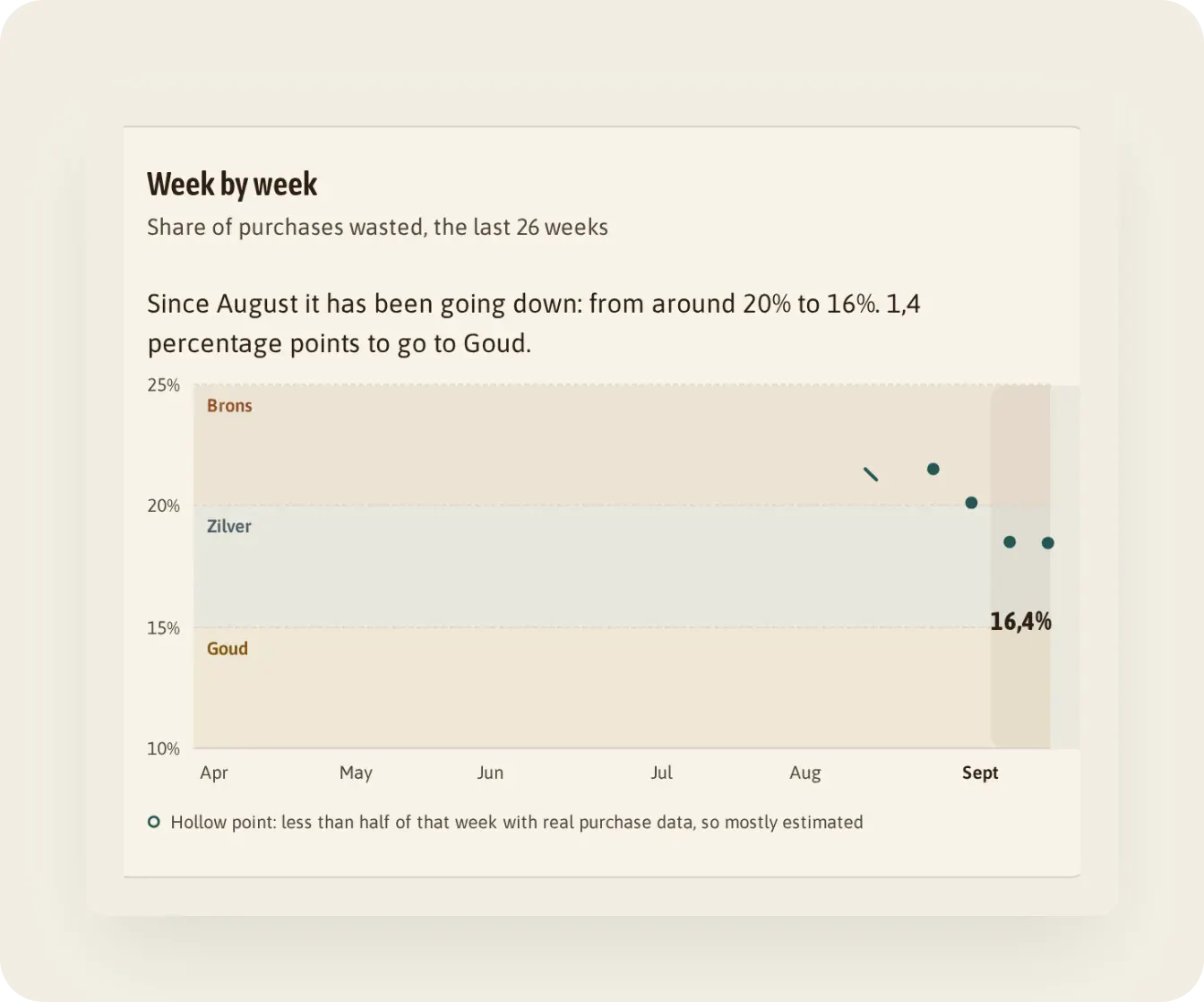
The dashboard shows waste as a percentage of purchasing, per meal moment and per ward, with the weekly trend. The ingredient and meal heatmap shows after which meal the mash or the vegetables come back, and in the photo gallery you can find the plates themselves. That way you see for yourself where three scoops could become two.
Curious how that works on your wards? Book a demo.